The Purpose of Getting Lost
About the Book
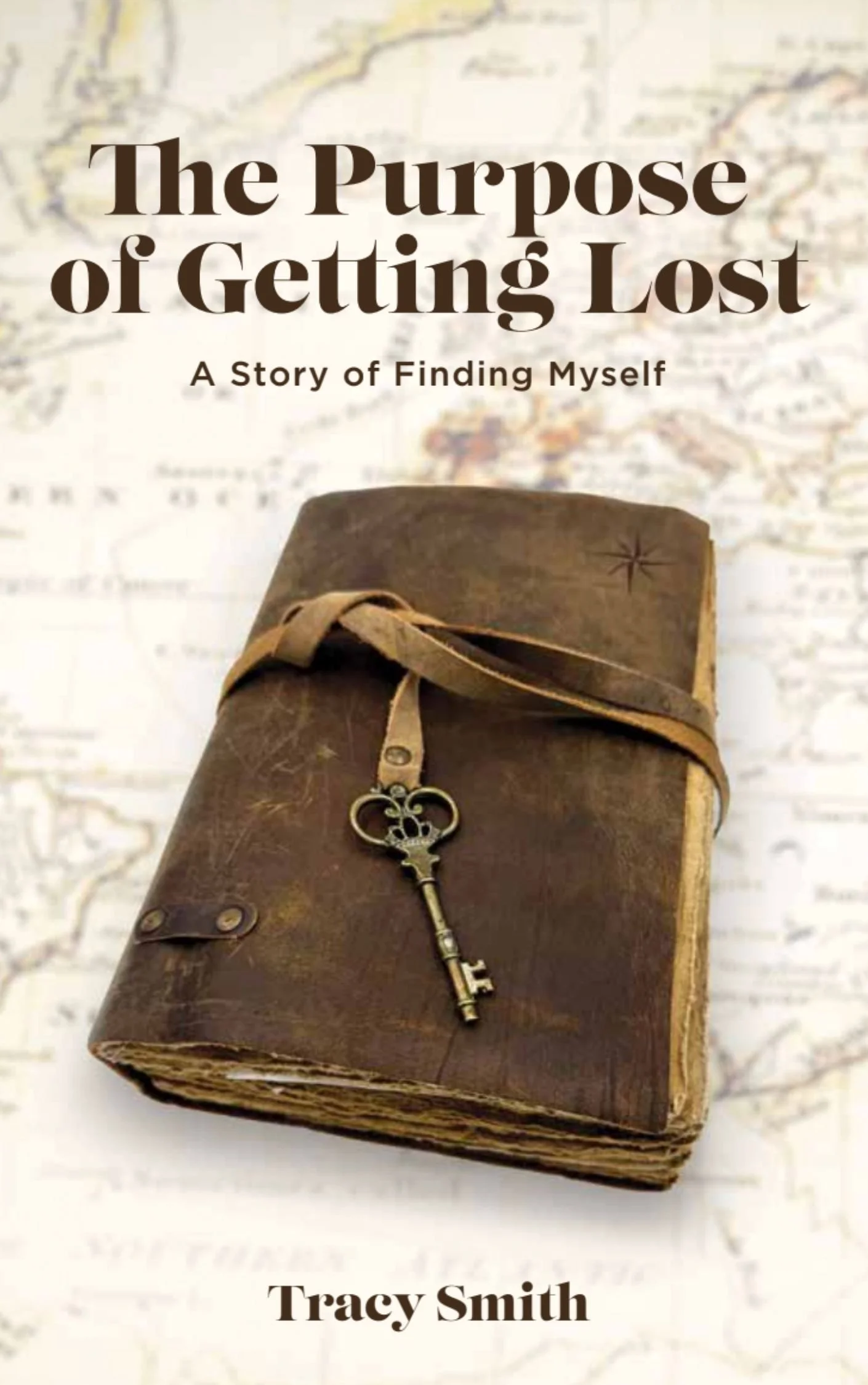
The Purpose of Getting Lost is a book about noticing—about the small shifts that happen when a woman pauses long enough to listen to herself.
Written through a series of interconnected stories shaped by travel and midlife, the book traces moments of movement, stillness, and return. In quiet mornings, unexpected detours, and ordinary in-between spaces, Tracy explores what surfaces when familiar roles loosen and long-held patterns come into view.
This is not a story of reinvention or arrival. It’s a reflection on living without tidy resolution—on uncertainty, aging, and the ongoing practice of choosing yourself without knowing exactly what comes next. The Purpose of Getting Lost is for anyone who feels in between versions of their life, paying attention, and learning to stay with the questions rather than rush toward answers.
Selected Excerpts
-
I was looking for something before I even had the words to know what it was I was looking for. Most of us start searching before we recognize the question driving us—the question that drives every journey. Mine was this: Where do I belong?
It wasn’t a question I could answer from my couch in Chicago. So I went looking for answers—and found them in movement.
I danced in mosh pits in Doha and sank in quicksand in the Amazon. I drank rice wine with the Hmong and laughed with strangers. I swam naked in the Caribbean and got lost in the streets of Reykjavík. The geography shifted, the relationship rose and fell, my body broke and healed. Through it all, belonging never announced itself—it only whispered.
Not after the divorce that left me untethered, the kids who were growing up and away, or the friendships that faded when I stopped playing the part. Not after a body that betrayed me with surgery after surgery, forcing me to reckon with what I could control and what I couldn’t.
For most of my life, I’d looked for belonging in other people—in marriage, in motherhood, in the opinions of friends and family who always seemed just out of reach. I bent myself into shapes I thought would make me acceptable. I smiled when I wanted to scream. I stayed when I wanted to run. And still, I never quite fit.
So, at 49, single and recovering from my first shoulder surgery, I did something that felt both reckless and inevitable: I booked a flight to Iceland. Then Norway. Then Ireland. And I didn’t stop.
Each place I visited seemed to have an answer all its own. The cities, rivers, and mountains were the characters I met on my journey. At times they met me where I was at; other times I had to go to them. But with every stop, I left with a story they helped shape—a conversation about who I was becoming.
I know I’m not the only one who’s reached middle age searching for more. The stereotypes are easy: men buy cars, women book flights. Those endings often point toward finding a forever partner. But my path was different. It began with surgeries and scars, with a body that kept forcing me to stop and start again. Travel wasn’t an escape, but it was a way to stitch myself back together, to pay tribute to the parts of me I’d ignored for too long. I also know not everyone can take off across the world when their life falls apart. Booking flights and taking PTO are privileges, and I don’t take them lightly. I borrowed against my own future, convincing myself that my pension would be enough and my happiness was more important than an emergency fund. Maybe not everyone will understand the choices I made, but it was the only way I could keep from feeling numb. What I hope to share here isn’t just the geography of my travels, but the geography of belonging and change—something we can all find in our own ways.
What I’ve learned is that belonging isn’t something we wait for. It’s something we build—from the inside out.
-
I used to believe belonging was something you earned through effort.
What I didn’t understand, what took me decades to see, was that I’d been confusing wanting with claiming. I had wanted to belong my whole life. I had never once reached out and taken it.
That changed on a cold Tuesday night at a bar stool in a neighborhood Italian restaurant, I heard four words and something in me answered before I could stop it.
We were at Ciao Ragazzi, a local Italian restaurant in the neighborhood. It was cold that night, and because it was a weeknight, the bar was mostly empty. Cheryl and Stacey were already there when I arrived. Their dinners finished, drinks half gone. I slid onto the stool next to them and ordered a beer before I even had my coat off. Stacey had her Miller Lite with a lime, Cheryl had vodka and water, with just enough cranberry to tint it pink. That night, the conversation started no differently than any other. We talked about life, guys, my kids, Cheryl’s son, and work. It was the usual weeknight catch-up until one of them said it.
"We’re going to Ireland."
“I want to go,” I said, so fast the words startled me. No pause to ask about the details, no running the numbers in my head. The words were out there now, sitting between us.
Without a second thought, as Stacey pulled up her flight information, I was on the Expedia app, trying to locate the flight they had booked. Before anyone could say no, I pulled out my credit card and booked the flight. While I was booking my flight, Stacey emailed the travel agency, Love Irish Tours, sharing my interest in joining the tour. The deposit could wait. I knew I was going.
The questions came later, the way they always do.
Who would take care of Henry?He was barely sixteen and still in high school. It was the first time I’d traveled and left the kids at home, in our house, without me there. I knew I could count on my ex-husband Jay to keep things steady on the home front, but I flew my mom in anyways — their first stretch of real time together, and without me there as a bridge between them. There was Oliver, our thirty-pound golden doodle, all energy and mischief. And our sweet, elderly cat, Shadow. There was Sophia, who would turn eighteen while I was gone. She was at college, but still this would be the first birthday I wouldn’t be there when she woke up or when she went to sleep. It was also Henry’s first year playing football, and I wouldn’t be there for homecoming, senior night, or parent-teacher conferences.
And then there was the money. I had some saved, but it was for high school and college tuition. I wondered: Could I touch it? Could I replace it in time to pay the balance when it came due?
I noticed, somewhere in the middle of all this, that I was very good at generating questions. I had always been good at it. It was a skill I had refined over years of wanting things and finding reasons why not. The questions felt like due diligence. I knew they were actually something else — a way to politely back out.
But this time felt different. For the first time, I felt ready, like the timing was right and I had earned the right to go. None of the questions had been resolved. None of the worries had been quieted. I was going — not because I had figured something out, but because for the first time in a long time, I had claimed something before I could take it back.
The was new. That was the beginning.
-
You can be welcomed anywhere and still feel apart from it. How do you know when hospitality turns into belonging—when you’re not just visiting a community, but actually are a part of it?
That’s what I felt when I boarded a plane to Việt Nam during Tết—the Lunar New Year. It wasn’t just another stop on my travel itinerary. It was a return. A return to a country that had left its mark on me the year before. A return to a friend I barely knew but deeply trusted. A return to a version of myself that still believed in the possibility of belonging.
I met Minh the year before when I first toured Việt Nam. I was drawn to her energy. The way that she described her family. The things that she wants from her life. But most importantly, her absolute stance on not compromising what she wants from her life. Happiness. A family. But not willing to sacrifice love for the sake of a family.
I wanted an authentic experience in Việt Nam. I wanted to see, taste, feel, and hear what Việt Nam felt like to the people who lived there. So, we decided that Tết, the celebration of the lunar New Year, was the perfect opportunity for that. But this was Tết—the most sacred time of year in Việt Nam. And somehow, I’d been invited in. By Minh, whom I’d met while traveling in Đà Nẵng; she’d extended an invitation to spend the holiday with her family. At first, I hesitated.
Will I be intruding? Will I be a burden? But the pull of something deeper—curiosity, perhaps, or the aching desire to feel part of something ancient and shared—overcame the voice that told me to stay in my lane.
Prior to heading to Việt Nam for Tết, I spent two weeks in Cambodia and Laos, so I was eager to get back to Việt Nam where I had first felt like I belonged.
Up to this point, I’d felt excited. But somewhere in the air between Hà Nội and Buôn Ma Thuột, uncertainty and the magnitude of what I was doing hit me. What should I expect for sleeping arrangements? What were the shower and toilet facilities going to be? Electricity? Not only the physical, but also the emotional magnitude. I like my space. I don’t love always being on the go, and would her family be okay with me being a little shy? Not shy in the traditional sense, but shy in a socially awkward way.
After landing at Buôn Ma Thuột Airport, a small airport in the central mountainous region of Việt Nam, I immediately saw Minh. Her smile covered her whole face. In traditional Tiếng Việt clothing, so colorful that it suited her personality. Seeing her put me at ease, and I was excited to see where we were going.
Her brother was waiting with her, and after picking up my luggage, including all the goodies I’d packed for her family, we walked toward the car. Outside the terminal, the air felt cool and clean. Different than the smoggy air I breathed in Chicago or even the air of Hà Nội. I wanted to take deep breaths of it, savoring it for as long as I could. If only I could bottle it and take it back with me.
As we drove through the city of Buôn Ma Thuột on our way to Đắk Lắk, I gasped in awe at the colorful decorations. Bright red and gold decorations, such as flowers and zodiac animals, were draped in doorways and storefronts, symbolizing luck, prosperity, and happiness. The red envelopes of Tết, lì xì, were adorned with golden calligraphy and were stacked neatly on trays. I picked up a few. I saw the warm gold of the lanterns on the shops as they swayed in the light breeze.
As we drove through Minh’s hometown, I noticed the kids outside playing, houses set farther back, fewer cars and motorbikes. The atmosphere was different than that in the city. We pulled up to Minh’s house, and I was greeted immediately by her parents.
When I walked into their house, the first thing I saw were the large chairs and bench in the main room—Trường kỷ, traditional Tiếng Việt wooden chairs. They were crafted from rich, dark hardwood and intricately carved with delicate floral patterns. The chairs were low to the ground with a solid, flat seat and a tall back. They appeared to be ornamental, but I could tell they were also functional. I noticed they could seat multiple people or serve as a daybed for resting or welcoming guests. The surface was cool to the touch as I ran my fingers along the chair back, the polish smoothed by generations of use. Minh told me this is where they have tea and laugh and share stories with their family and friends. She told me the furniture is not just furniture, but it is a symbol of hospitality and heritage.
I was offered a seat in one of the majestic chairs. And this was my first taste of belonging. Of being accepted. Of having membership in Minh’s community. But it would not be my last.
Later that day, Minh told me that we were having a party in my honor. Her family wanted to properly welcome me. One of the things that drew me to Việt Nam was the level of welcome and care I found everywhere I went. Water bottles were always readily available in the car. Snacks and coffee whenever I wanted.
My guides always asked how I was doing. Was I good? Did I need anything? I’m blown away by their level of attention because in Chicago every day was a grind. Wake up. Go to work. Come home. Cook dinner. Clean the kitchen. Answer emails. Go to sleep. And wake up the next morning and do it all over again. Merging on the highway, middle fingers popping up as other drivers had somewhere to be, in a bigger hurry than I was. At the grocery store, pushing and shoving at the deli counter. I was next. No, I was. No, I was. It sounded like a sibling squabble.
Minh’s family began to arrive later that day. They were curious to see the Westerner who had traveled 8,000 miles to meet them and share her well wishes for the New Year. As they arrived, I hear “Chào mừng.” (Welcome.) Respect is critical to the Tiếng Việt. So, I was immediately asked how old I was. I was taken aback. In the United States, it’s considered a faux pas to ask a woman her age. Minh explained to me that they ask so they can address people properly. Okay, I say, I am fifty-one. As I tell them my age, I wonder what they think about Minh’s and my relationship. I’m closer to her mother’s age than hers. I don’t think there are words that explain what Minh’s openness to our friendship means to me. And that is why I was there. However, as I reflected further, they weren’t thinking that at all. They were simply happy to have me there. Community.
Her family had been working all day on the meal preparations. Caramelized pork, chicken, steamed rice, and seasonal fruits. I was starving. But before eating, her family prepared a simple meal offering of gratitude and mindfulness. The practice, known as cúng dường, is performed quietly and respectfully, especially in more traditional or devout households. I watched quietly, not wanting to disturb her father as he set the plates of food on the family altar as an offering to the Buddha and to the ancestors. Incense was lit, and her father said a quiet prayer, expressing gratitude for the meal, honoring the spiritual presence of loved ones, and acknowledging the many hands and lives involved in bringing the food to the table.
He said, “Nam mô A Di Đà Phật. Con xin cúng dường chư Phật, chư Bồ Tát, chư Hiền Thánh Tăng, và ông bà tổ tiên.”(Homage to Amitabha Buddha. I respectfully offer this food to the Buddhas, Bodhisattvas, Noble Sangha, and my ancestors.)
I’m again struck by the fact that I have been invited into this community without reservation. To see this simple act of humility and interconnection. It reminded me that eating is not just nourishment for the body, but also an opportunity to cultivate compassion, awareness, and reverence.
As we sat to eat, we raised our glasses and someone called out “Một, hai, ba… dô!”—Việt Nam’s spirited version of “Cheers!” The toast is more than a gesture to the Tiếng Việt people; it’s an invitation to bond, to laugh louder, to let loose. It was now my turn to approach the table of uncles and raise my glass. I said in my soft voice, still so unsure of my Tiếng Việt, “Một, hai, ba… dô!” They told me: Again, louder. Now I said, “Một, hai, ba… dô!” This time, with more confidence.
After dinner and with the tables cleared, one of Minh’s cousins brought out a karaoke machine. And that was when the fun started. I didn’t know the words they were singing, but her aunts danced, and the kids played and jumped around. Later, their family friends came over, taking turns singing songs, loud in the night air.
Despite the warm welcome, I was always aware of being outside the inner circle. Perhaps that was why I found myself sneaking away to the bedroom or declining a visit to the beauty salon. I was a little overwhelmed by the language barrier. Minh translated when she could, but there were long stretches where I sat quietly, smiling politely, unsure if I was meant to laugh or speak. It was strange to feel so welcomed and still so separate.
Somewhere between the large family gatherings and wondering if I overcommitted myself, I started making plans to leave early. Hiding behind excuses, I was frustrated that I’d come so far and could still fall back so easily. I started scrolling for flights, repacking my clothes, anything to take my mind off feeling like a failure.
I never told Minh the real reason I left early. Yes, a family member was sick, but that wasn’t the whole truth. I’d reached my limit—the noise, the closeness, the feeling of being both seen and unseen. I was overwhelmed, and I didn’t know how to say that without sounding ungrateful. So, I said the thing that would be easiest to understand. Maybe I was back to pretending to others. But at least I was honest with myself.
And because of that, I don’t regret going. What Minh and her family offered me wasn’t belonging in the full sense, not the lifelong kind rooted in memory and blood. But it was something. It was an invitation. It was grace. It was a seat at the table during the most important holiday of the year. And that mattered. Because sometimes sitting at the threshold of a community is enough. Being allowed to witness—to hold space in someone else’s tradition—is its own kind of inclusion.
When I left Minh’s hometown, I carried no souvenirs, only memories. Of food I couldn’t name. Of fireworks bursting high across the night sky. Of laughter I didn’t understand but felt. Of a place where I didn’t quite belong—but was welcomed anyway. I left behind red and yellow envelopes full of Tiếng Việt dong. These envelopes and their contents are a symbol of well-wishes for the New Year. But more important than the money and gifts, I left behind a piece of me. The piece that was always searching for belonging in the wrong places. The one looking for community in a neighborhood that didn’t ask me to be there. With a family that no longer wanted me after the divorce. In relationships that didn’t choose me. At a job that pushed and took more than it pulled and gave.
Two dozen countries later, I’m still that woman at the gate, weighing the risk and going anyway. Only now does the belonging feel less like a gamble and more like a given. Maybe that’s all any of us can do—stumble, learn, try again, rinse and repeat.
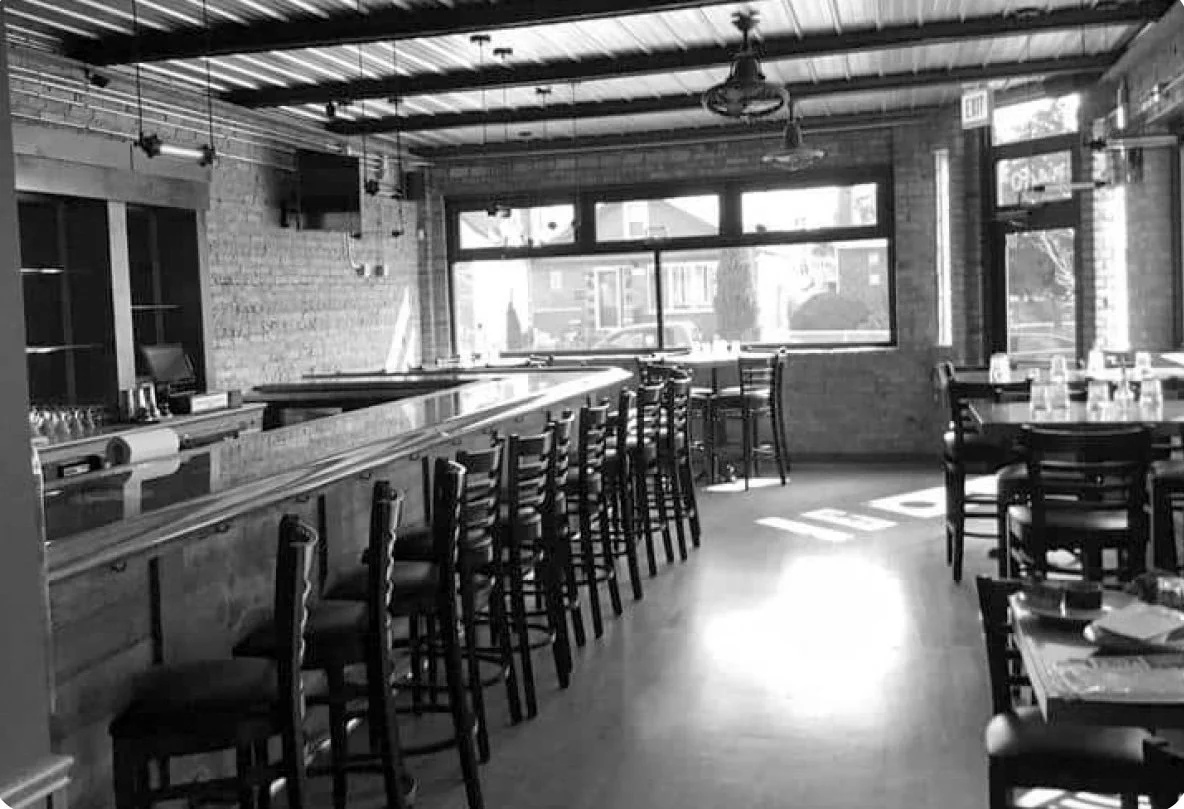
Ciao Ragazzi. Where it all began. Winter 2022.
Reviews